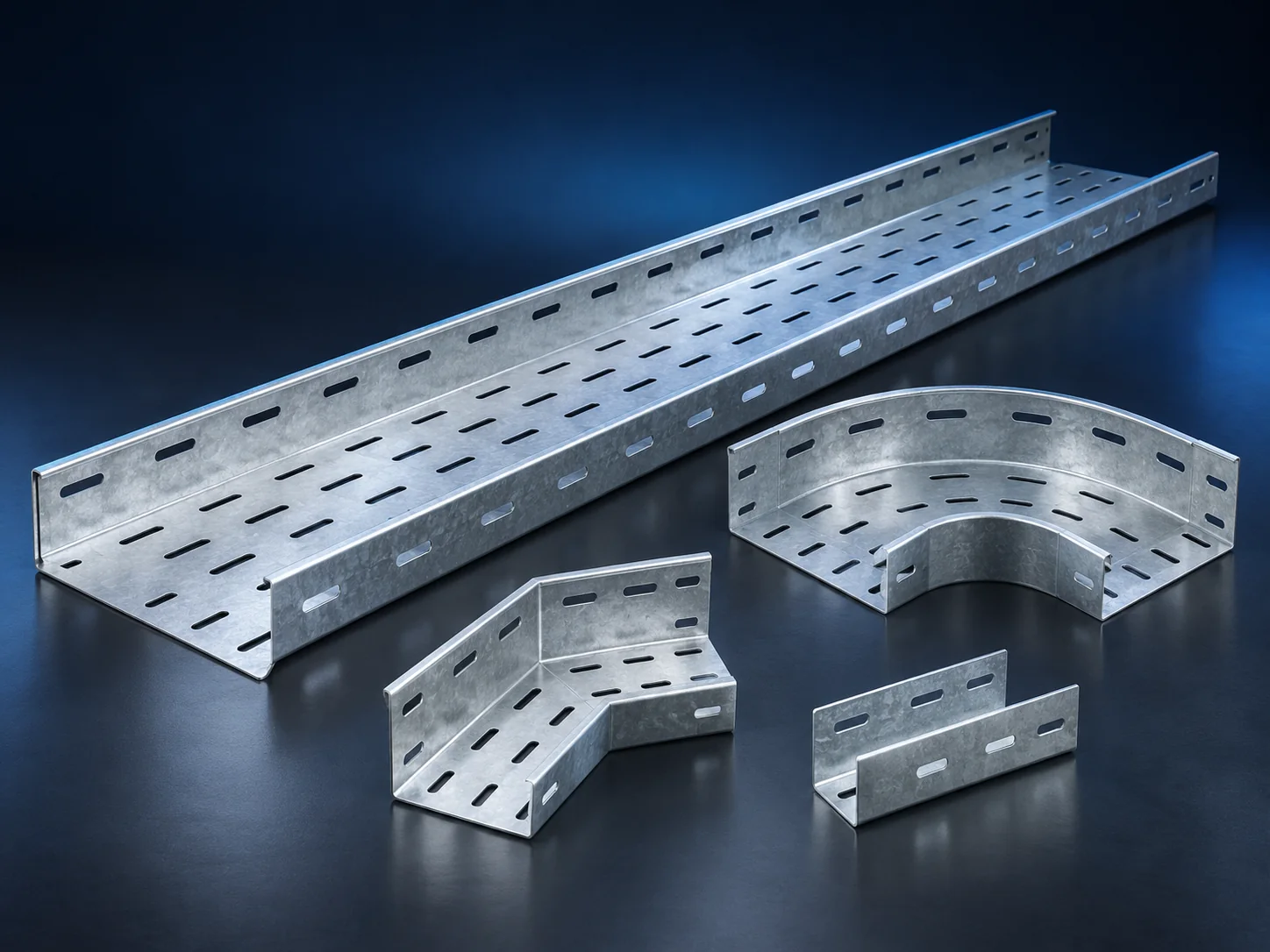
Perforated Tray
Continuous ventilated support for organised power, control and communication routes.
 Request a Quote →
Compare perforated, ladder and wire-mesh cable trays using cable type, loading, ventilation, support span, route geometry and installation environment.
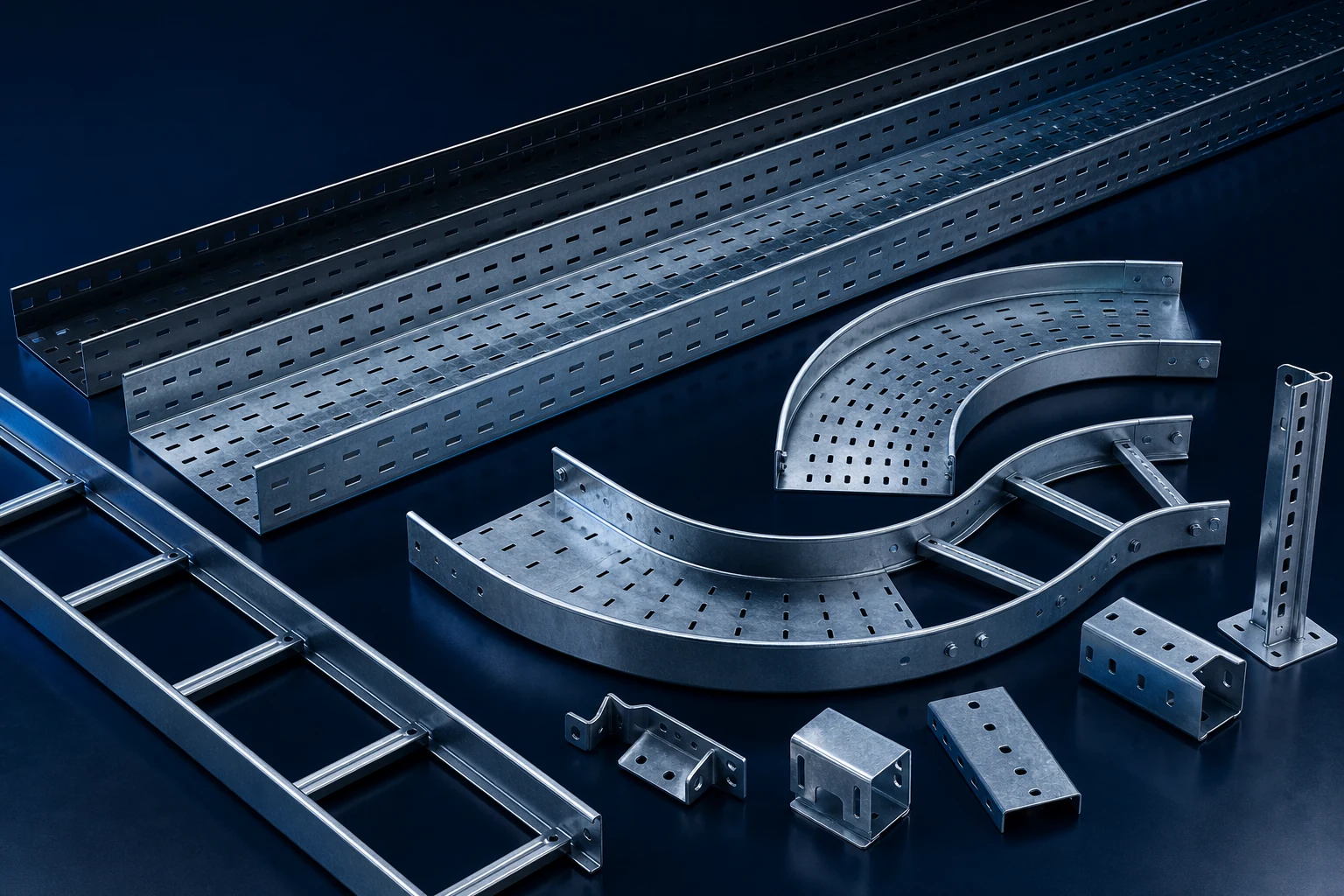
Perforated trays suit many light-to-medium power, control and communication routes. Ladder trays are commonly considered for heavier power cables and longer runs. Wire mesh trays are widely used for data, communication and light-duty services. Final selection must be checked against the cable schedule, loading, span and environment.
Continuous ventilated support for organised power, control and communication routes.
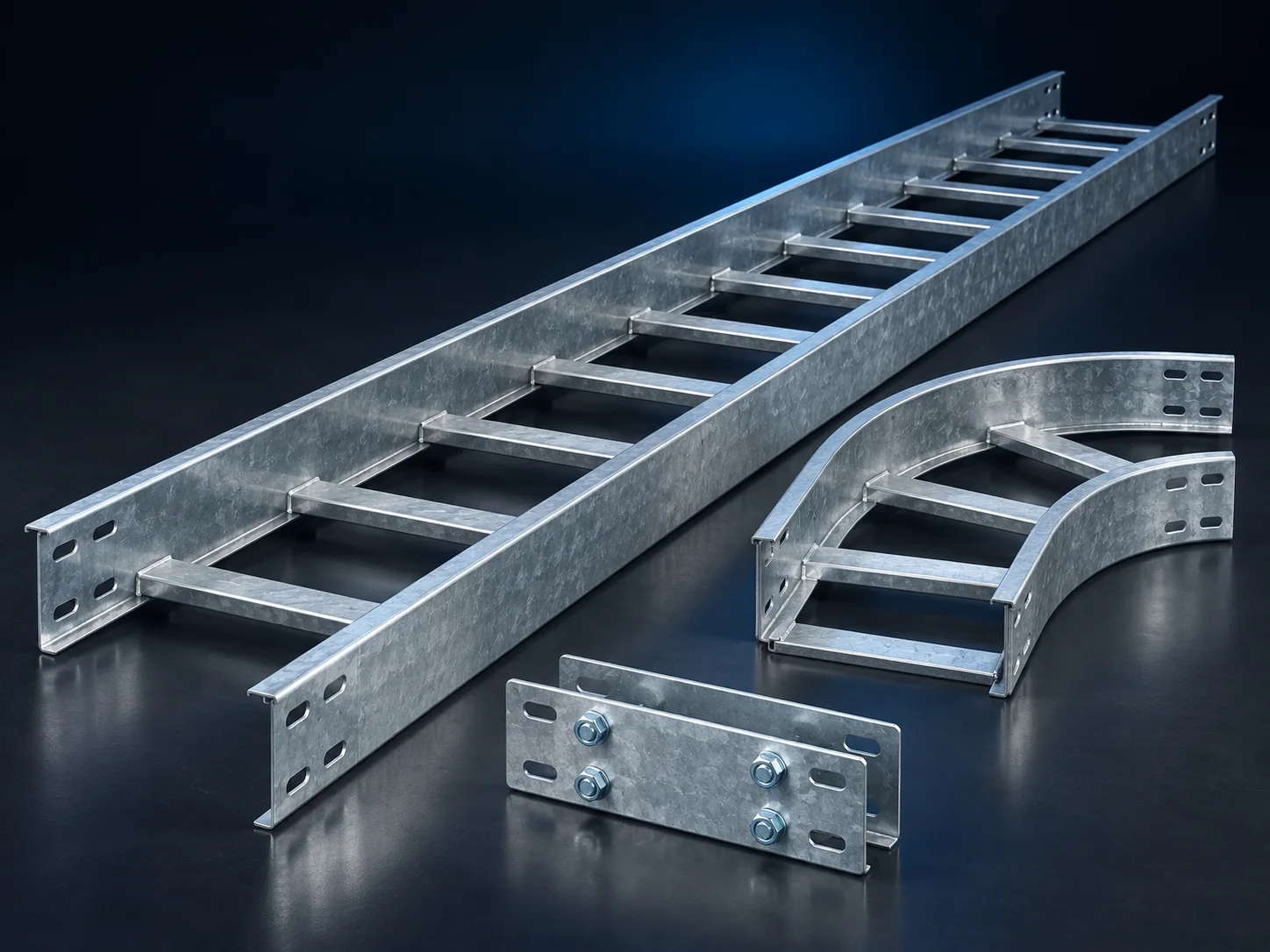
Open rung construction commonly considered for heavier power-cable routes.
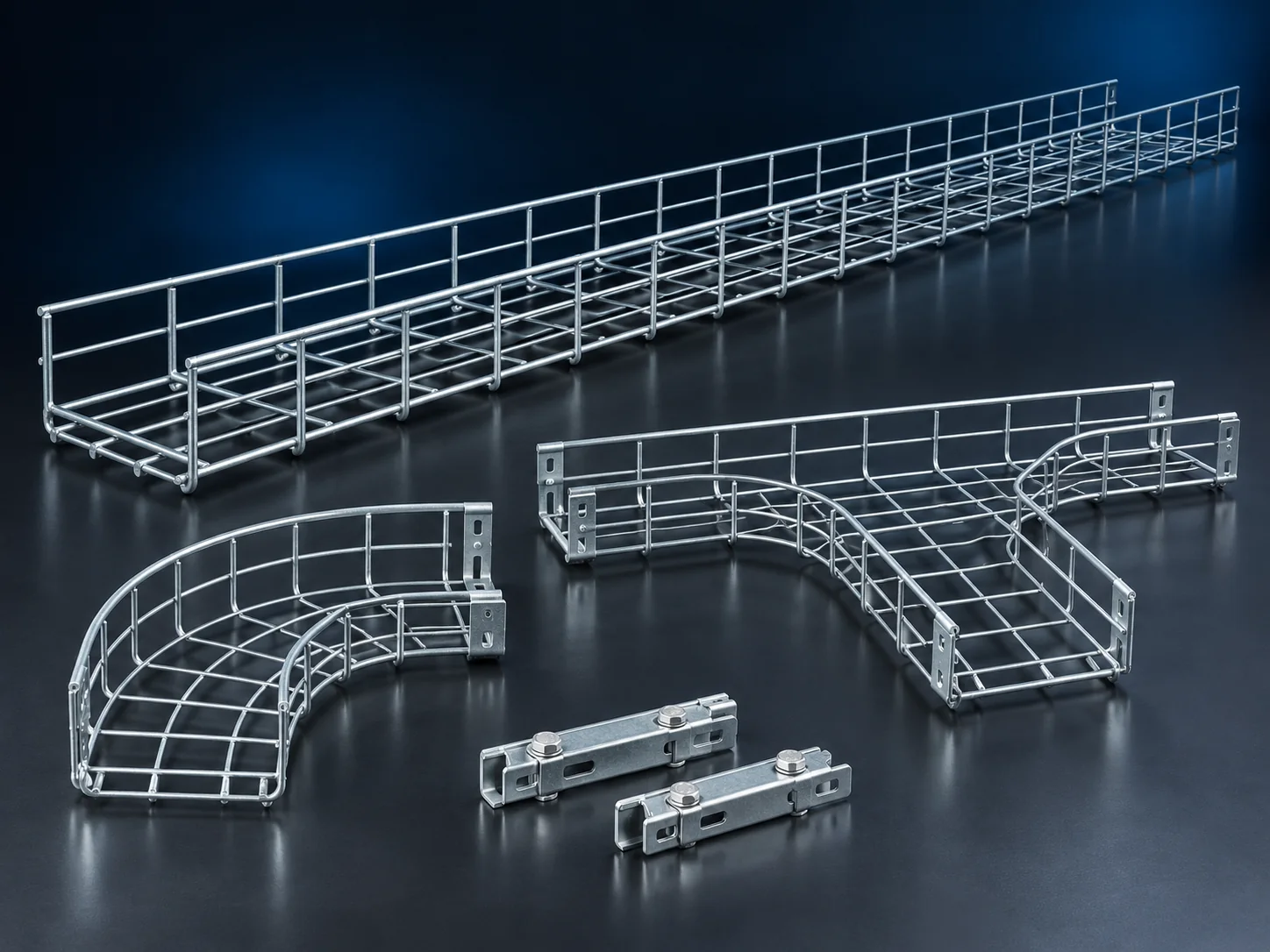
Open, adaptable routing for data, communication and light-duty services.
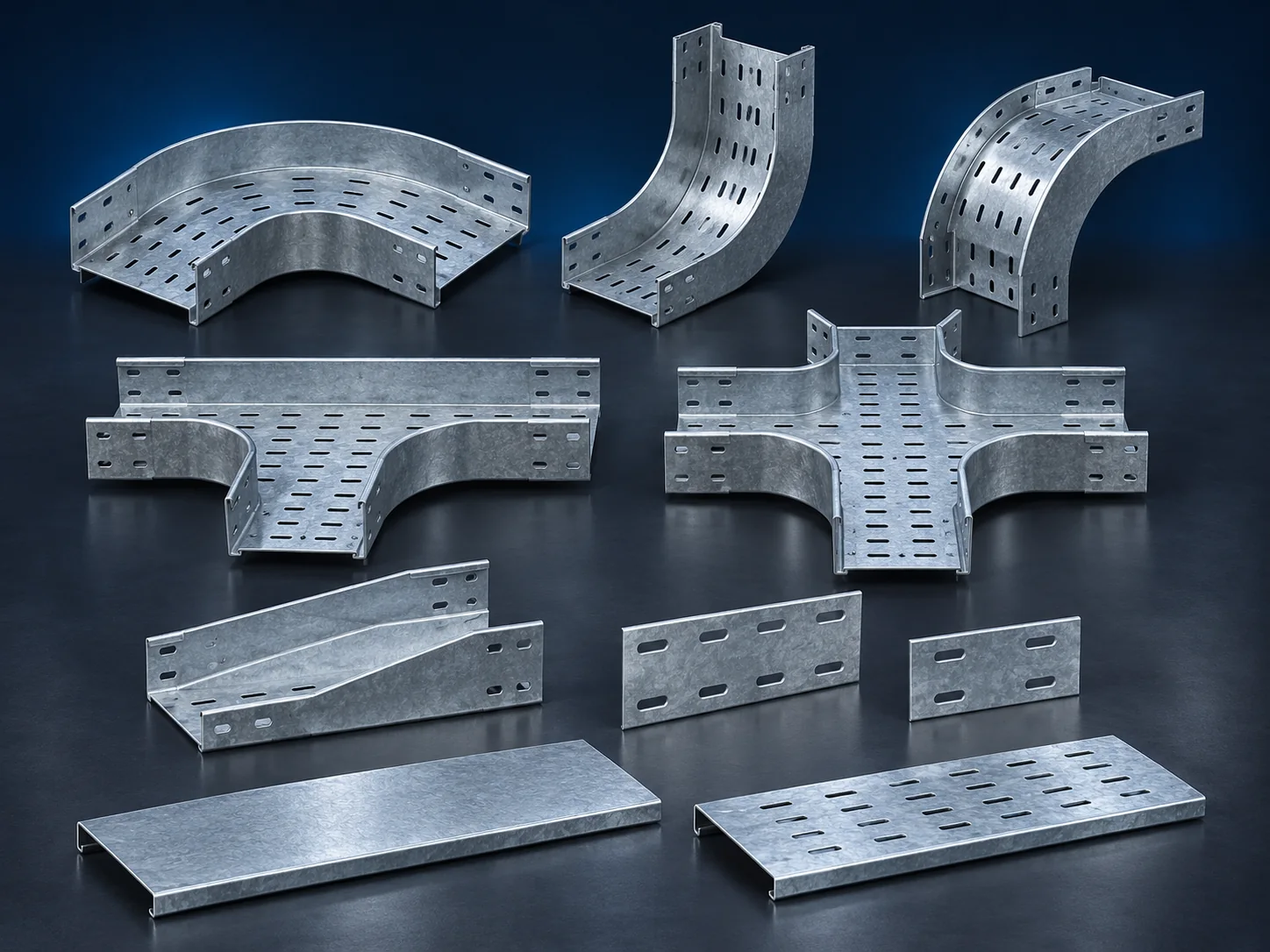
Representative product visuals. Final tray profile, thickness, finish, accessories and support span must follow the approved project requirement.
| Selection point | Perforated Tray | Ladder Tray | Wire Mesh Tray |
|---|---|---|---|
| Typical cables | Power, control and communication | Heavy power and control | Data, communication and light-duty power |
| Construction | Ventilated sheet base and sides | Side rails with transverse rungs | Welded-wire basket |
| Ventilation | Good | Excellent | Excellent |
| Typical duty | Light to medium, subject to design | Medium to heavy, subject to design | Light, subject to design |
| Route changes | Coordinated bends, tees and reducers | Engineered bends, tees and reducers | Flexible routing with compatible fittings |
| Common locations | Commercial buildings, plant rooms and services | Plants, utilities and infrastructure | Data centres, offices and technology spaces |
These checks improve initial selection and quotation accuracy. Final manufacturing data should follow approved project documents and coordinated installation requirements.
Identify cable type, outside diameter, quantity, weight and the required spare capacity for future circuits.
Confirm indoor or outdoor installation, exposure, humidity, corrosion risk, vertical sections and route restrictions.
Select usable tray area and combined cable load without assuming that width alone determines capacity.
Tray profile, thickness, cable load and support span must be reviewed together for the intended installation.
Include bends, tees, crosses, reducers, covers and dividers that suit the cable bend radius and route geometry.
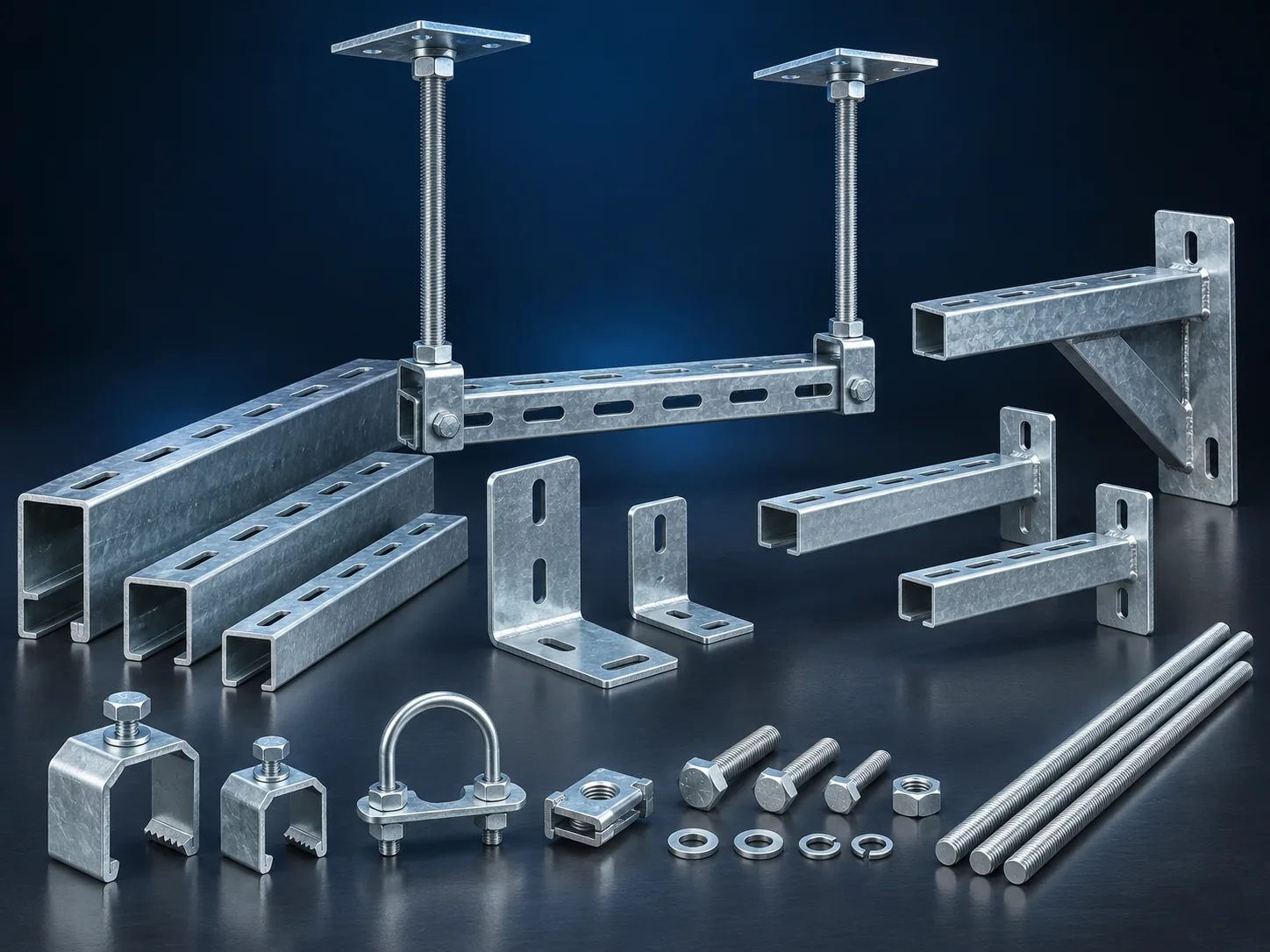
Provide the specified continuity arrangement, fixing hardware and safe access for laying, inspection and future additions.
Finish selection depends on exposure, humidity, corrosion risk, indoor or outdoor installation and the approved project specification.
Common for indoor commercial and service areas with normal environmental exposure.
Used where a coordinated colour finish and additional surface protection are specified.
Considered for industrial, utility or exposed environments requiring stronger corrosion protection.
A lower-weight option for project conditions where aluminium construction is technically approved.
Selected for demanding or corrosive environments when required by the project specification.
Planning reference
Use these answers for initial planning. Project-specific engineering review remains necessary before final procurement.
Ladder cable trays are commonly considered for heavier power cables and longer routes because their side-rail and rung construction supports ventilation, cable cleating and access. Final selection still depends on cable load, tray profile and support span.
Perforated trays are commonly used for structured power, control and communication routes where continuous support, ventilation and coordinated fittings are required.
Wire mesh trays are commonly used for data, communication and other light-duty cable routes because they are open, ventilated and adaptable. Basket size and support spacing must still suit the cable load.
Width is selected from cable quantity, outside diameters, segregation, allowable fill and future spare capacity. The result should be checked with route constraints and accessory compatibility.
Share the cable schedule, route drawing, tray type and sizes, material, finish, support span, accessories, quantities, project location and required delivery schedule.
Nextgen will review the available information and coordinate the applicable tray type, size, finish, supports and accessories.
Start a conversation
Share your SLD, BOQ or project requirement. Our team will respond with the right technical direction.